The place was working against us. Now it works with us.
Many farmers I talk to already know something isn't working — inputs climbing, pastures underperforming, the place fighting them at every turn.
That's where our family farm was in 2020. Since then I've spent time implementing a full regenerative transition at Blackwood Valley — 463 acres in Thorpdale — moving from input-dependent conventional grazing to a holistic system with measurably better pastures, animal health, and profitability.
I started Soil to Market because regenerative agriculture is ready to move beyond early adopters. The practices work. What's been missing is a consulting approach that competes on economic terms, not just values.
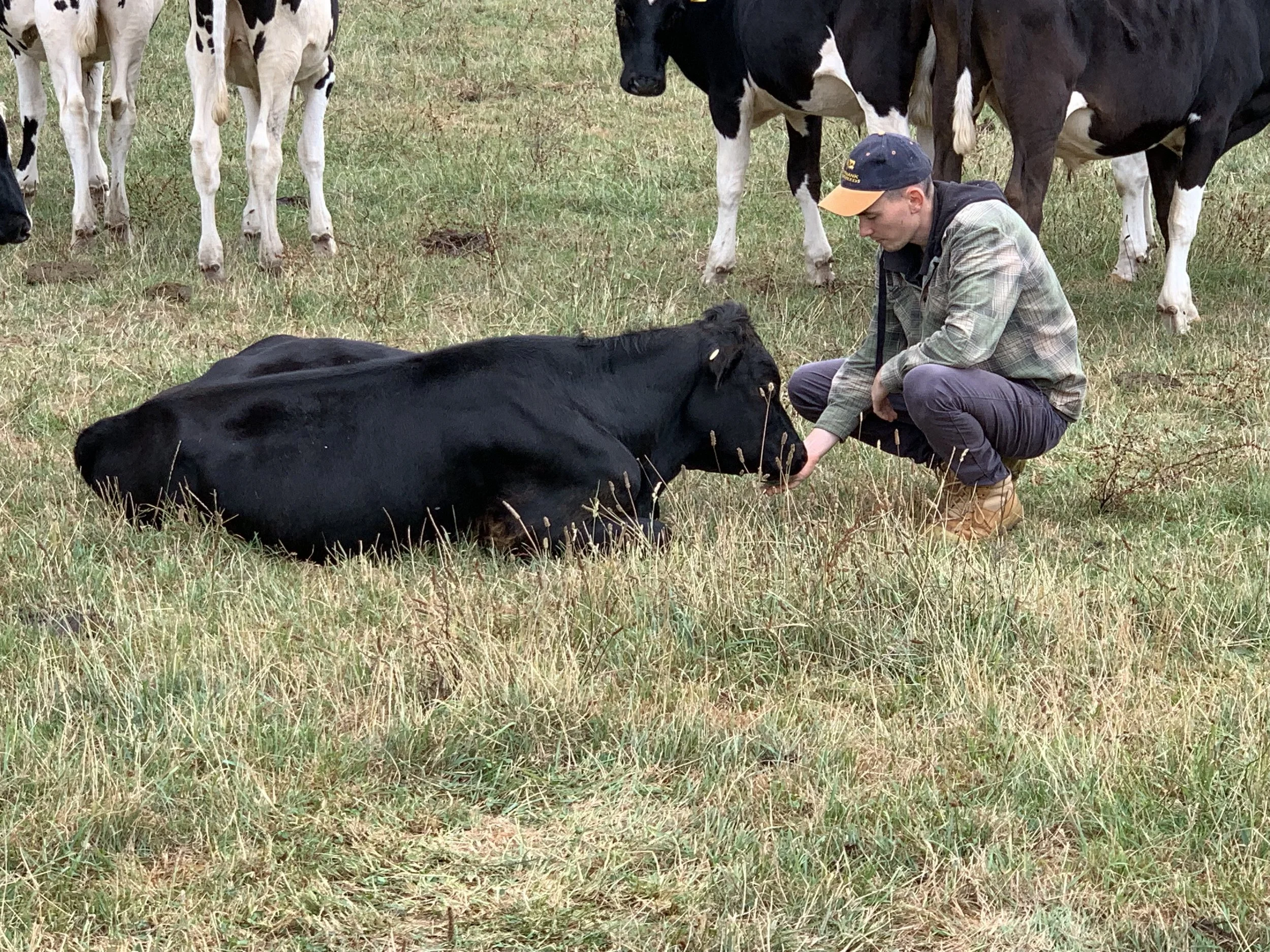
Training grounded in practice, not just theory
Want to see what a regenerative transition looks like in practice?
Blackwood Valley Case Study →Everything here comes from courses I've done and put into practice on our own farms — see how it all fits together in the Regenerative Best Practices library.
What people usually ask first
What is Regenerative Agriculture?
Regenerative agriculture has many definitions, but we define it as a set of farming techniques which aim to build long-term resilient farming systems through working with natural, complex systems on the landscape.
What specific techniques do you use?
It all depends on the individual farmer's context. One of our major tools is high intensity, low frequency grazing. Another is multi-species forage cropping using the SoilKee Renovator. A third is natural sequence farming, a technique using contour banks to slow water and nutrient flow through the landscape.
How can you help me implement regenerative agriculture?
It begins with understanding your particular context and your personal farming and business goals. Once we have a grasp on where we are and where we want to go, we can go about implementing systems to help us to get there. We can identify the areas which will provide the biggest return on investment (or bang for buck) on the path towards achieving your landscape goals.
What are your qualifications?
I gained an interest in regenerative agriculture in late 2020 through reading many books on the subject. Moving back home in 2021, I enrolled in a Bachelor of Science (Regenerative Agriculture) at Southern Cross University and completed that course in October 2023. Throughout that course, I also completed short courses including RCS Grazing for Profit (Online), Regrarians REX Farm Planning, Elaine Ingham's Soil Food Web Foundations, KLR Marketing and Tarwyn Park Training's Natural Sequence Farming course.
Have you put it into practice?
While learning regenerative agricultural practices at uni, through books and short courses, I was also able to implement these practices over the course of three years at Blackwood Valley farm. We've transitioned from a conventional based approach to a regenerative system which has improved both the productivity and profitability of the farm. After this success, I am keen to help others to build their farm's long term ecological and economic resilience using these regenerative practices.
Contact me to arrange a farm walk and consult today
Let's start with your context and your goals, and work out where the biggest gains are on your place.
Book a farm walk →